The Home Maintenance Problems We See Most in Dubai
Six faults account for most of the calls we take. Here is what is really behind each one, and which of them you can deal with without picking up the phone.
26 August 2026 · 7 minute read · TRAXICO
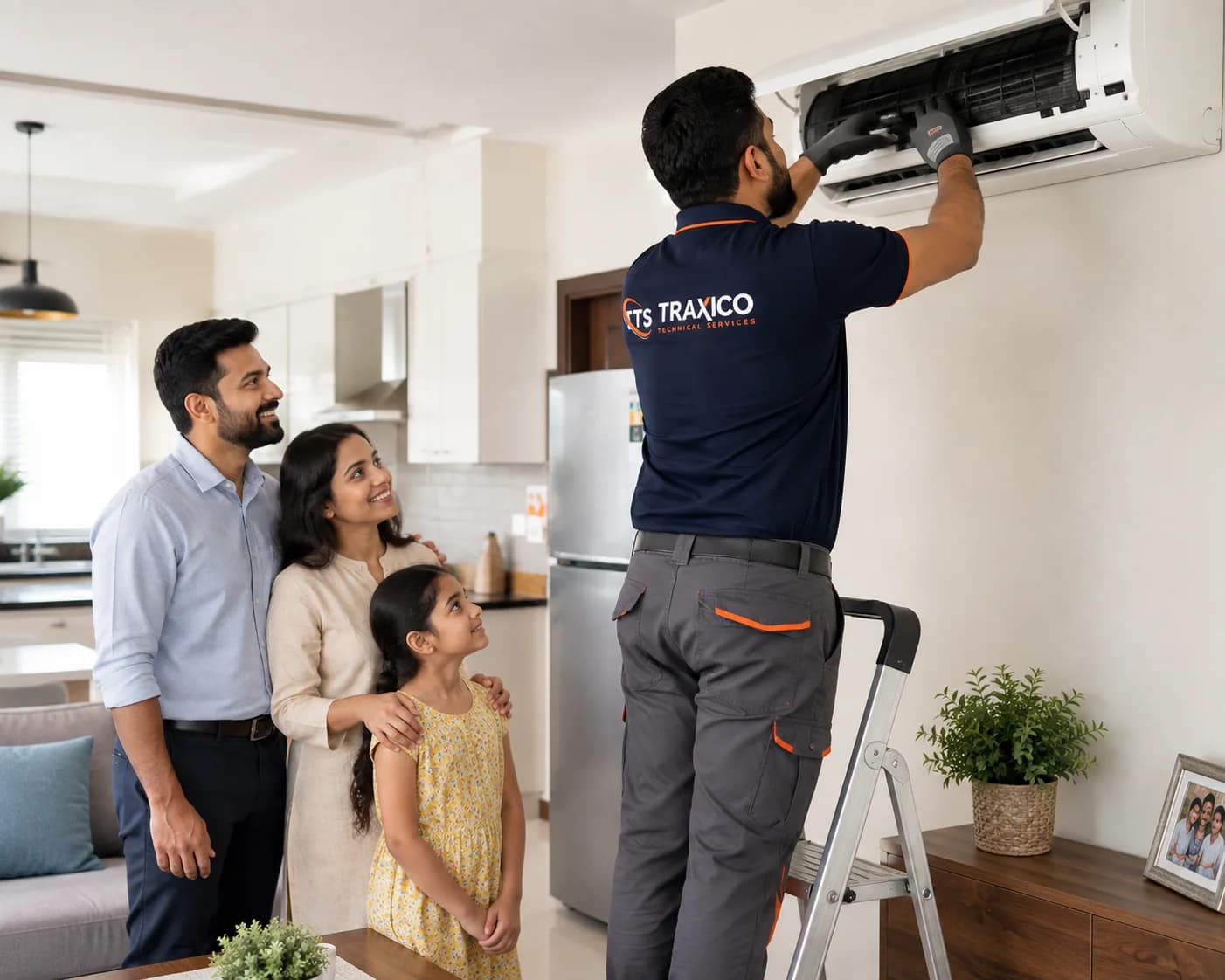
After a few years of running a maintenance company in one city you stop being surprised. The same handful of faults come round again and again, in villas in Arabian Ranches and in studios in Al Nahda, and the reasons are usually the same too.
What follows is the honest version of the six we attend most. For each one, what is normally causing it, what you can safely do yourself, and the point at which it stops being a five minute job.
1. The AC is running but the room is not getting cold
This is the single most common call we take. The fan is turning, the remote says 18, and the room sits stubbornly at 30.
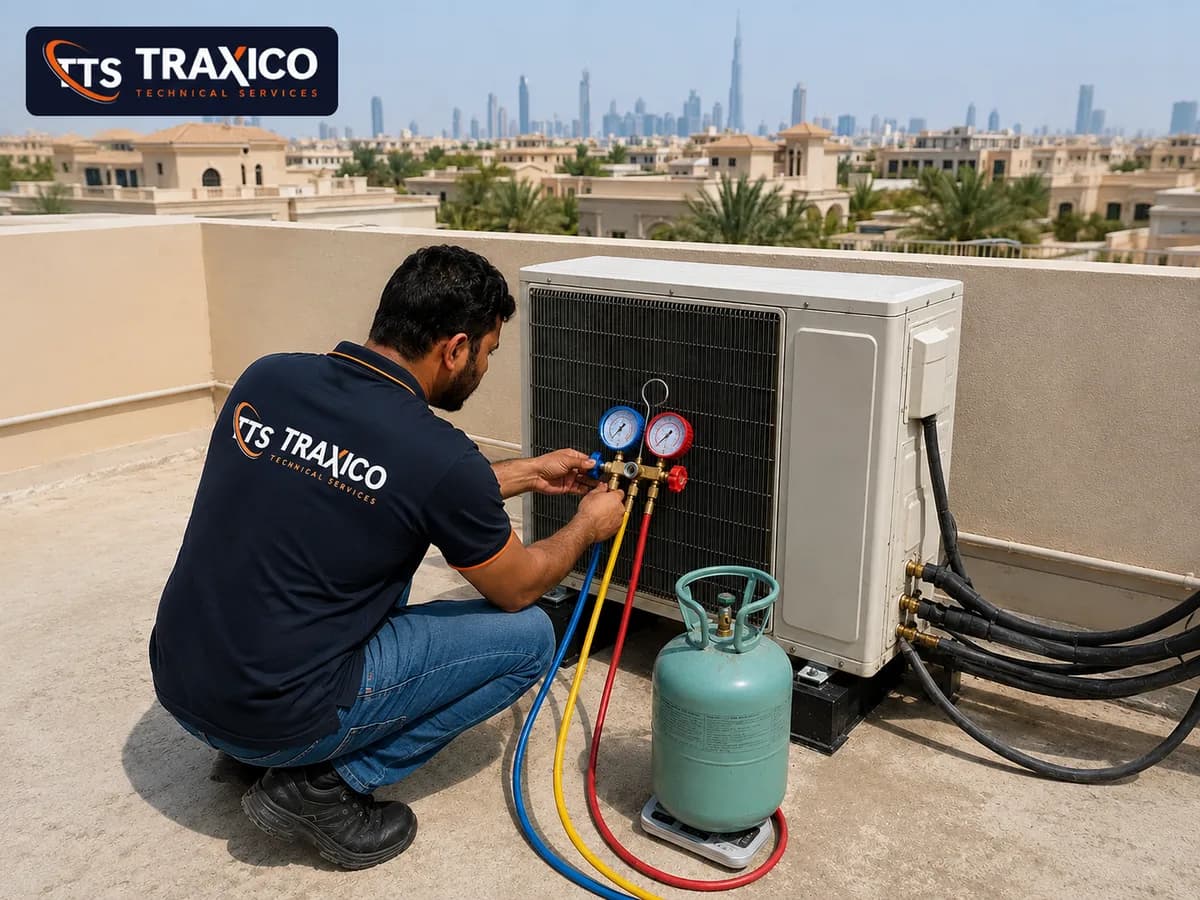
Most people assume the unit needs gas. Sometimes it does, but the important part is what that means: an air conditioner is a sealed system and it does not consume refrigerant. If the level is low, it has leaked out somewhere, and topping it up without finding the leak means paying for the same gas again in a few months.
Just as often it is not gas at all. A coil furred with dust cannot transfer heat, so the machine runs and runs and never quite gets there. In a city where these units run day and night all year, that film builds up faster than most people expect.
What you can do first
- Pull the filters out and wash them. If they are grey, that alone may fix it
- Check nothing is blocking the outdoor unit and that its fan is spinning
- Feel the two copper pipes at the outdoor unit. Both warm usually means low refrigerant
- Set 24 and leave it. Setting 18 does not cool faster, it just runs longer
2. Water dripping from the indoor AC unit
Usually the drain line rather than anything dramatic. An air conditioner pulls moisture out of the air and that water has to leave the building through a small pipe that runs on gravity alone.
In Dubai those lines silt up with dust and biological growth, particularly because a unit that runs continuously keeps the pan permanently wet. Once the line blocks, the pan fills, and the water comes out of the nearest available edge, which is usually the front of the unit and then your wall.
Switch the unit off and put a towel down. Left running, a blocked drain will get into plasterboard and skirting within a day, and what started as a cleaning job becomes a decorating one.
3. A breaker that keeps tripping
Here is the one piece of advice on this page worth taking literally: reset it once, and if it goes again, leave it off and call somebody.
A breaker is not being awkward. It is a safety device that has detected current going somewhere it should not, and every reset sends it there again. People come to us having reset the same switch every evening for a month, which is a month of something arcing quietly inside a wall.
It matters which device moved. An RCD trips on earth leakage, which usually means moisture or a failing element, often in a water heater. An MCB trips on overload, which points at too much load on one circuit or an appliance drawing more than it should.
4. Slow drains and blocked sinks
Kitchen lines block with grease, bathroom lines with hair and soap. Both build up gradually, so the water gets slower for weeks before anybody does anything about it.
The bottle of drain chemical from the supermarket is worth avoiding. It softens the blockage enough to buy a week, does nothing about the cause, and in the meantime it attacks the pipe and the seals. We have replaced plenty of pipework that would still be fine if it had been machine cleared instead.
What is worth doing is the simple stuff: clearing the trap under the sink, pulling hair out of the shower waste, and never pouring cooking oil down a kitchen sink in a building with a shared waste stack.
If a drain blocks repeatedly after being cleared, the clearing is not the problem. There is usually a fault in the line, a section with no fall or a joint that has dropped, and a camera survey is what actually settles it.
5. Cracks appearing in walls and ceilings
Fine cracks above door frames and along ceiling joints are common in Dubai and most of them are cosmetic. Buildings move, plaster shrinks, and a hairline crack in a five year old apartment is rarely anything to lose sleep over.
What matters is what happens next. Painting over a crack does not work, because the movement that caused it is still there and it comes back through the new paint within months. The crack needs cutting open along its length, filling properly, sanding flat and priming before any colour goes near it.
The ones worth taking seriously are cracks that are widening, cracks that run diagonally across a wall, and anything wide enough to get a coin into. Those want looking at rather than filling.
6. A brown stain spreading on the ceiling
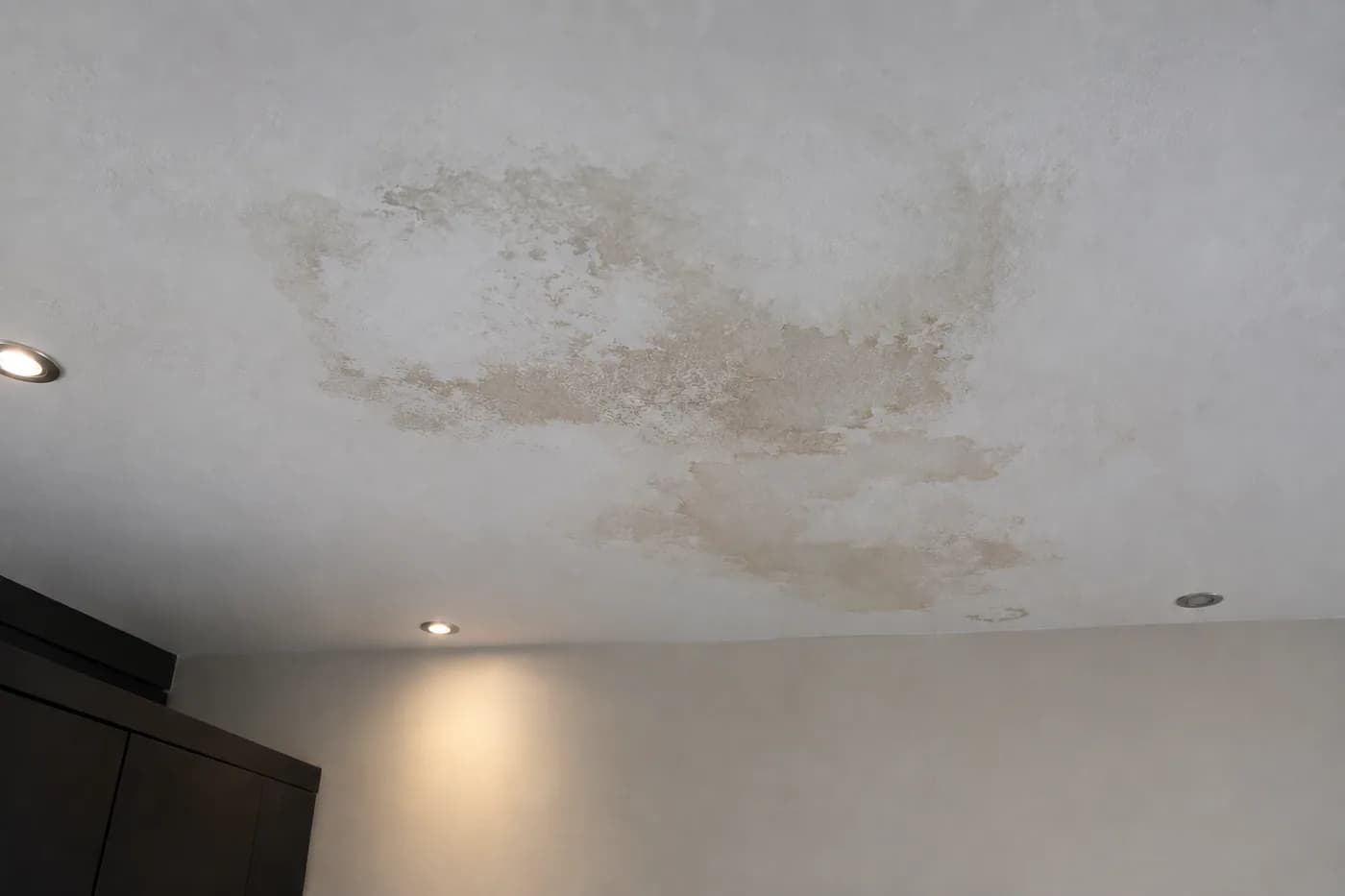
In an apartment this is almost always somebody else’s water. The flat above, a shared riser in the wall, or a blocked AC drain in the ceiling void between you.
Photograph it, with a date, and photograph it again in a few days so you have the spread. Then find out whose it is before anybody starts paying, because a riser is the building’s pipe and the building’s responsibility, and plenty of people have paid for a repair that was never theirs to make.
Sealing and repainting a water stain without stopping the water is the most pointless job in this trade. It bleeds back through in weeks and you have paid twice.
The pattern behind all six
Read them together and one thing links almost all of them. In every case, the visible problem is late. The drain had been silting for months, the coil had been loading for a year, the breaker had been telling somebody for weeks.
Nothing in a building fails suddenly. It fails slowly and then becomes visible suddenly, which is not the same thing.
That is the entire argument for looking at a property on a schedule rather than after a failure, and it is a stronger argument here than in most places, because equipment in Dubai runs around the clock and never gets a quiet period to survive on.
None of which means calling somebody for every drip. Half of what is on this page you can deal with yourself in twenty minutes. The other half is worth a phone call before it becomes the expensive version of itself.