Preventive Maintenance Every Property Owner Should Know
Most of what keeps a property healthy is dull, cheap and takes minutes. Here is the list, split into what you can do and what somebody should be doing for you.
20 August 2026 · 6 minute read · TRAXICO

Preventive maintenance has a reputation for being something companies sell rather than something that matters. Fair enough, given how it is usually sold. So here is the version without a package attached to it.
This is what we would actually do in our own homes, split into the things worth doing yourself and the things that genuinely need somebody with equipment.
What you can do yourself
Rinse the AC filters
Every three or four weeks. Lift the front cover, slide the filters out, rinse them under a tap, let them dry properly before they go back. It takes five minutes and it is the single most useful thing a resident can do.
Filters here load far faster than the manual assumes, because the units run around the clock and the air carries a great deal more dust than the machine was designed around.
Look under the sinks
Once a month, open the cupboard under the kitchen sink and each bathroom basin and put your hand on the pipework. You are feeling for damp, not looking for a puddle. A joint that is weeping will feel wet long before anything shows on the floor.
While you are down there, check whether the chipboard carcass has started to swell at the base. That is the tell for a slow leak nobody has noticed.
Run the isolation valves
Every few months, turn the small valves under your sinks and behind your toilets fully off and back on. A valve that has sat untouched for three years seizes, and you will discover that at the exact moment you need it to work.
The same applies to the main stopcock for the property. Find out where yours is before you need it, not while water is coming through a ceiling.
Test the smoke alarms
Press the button. It takes seconds and people go years without doing it. In a flat with a hard-wired system, a chirping unit usually means a backup battery rather than a fault.
Rinse the outdoor unit
If your condenser is somewhere you can safely reach, on a balcony or beside a villa, hose the fins down when you wash the area. Gently and from the outside in. It is not a substitute for a proper coil wash but it slows the loading considerably.
What needs a technician
Coil cleaning, properly
Both coils, with the right cleaner, and the indoor blower wheel washed blade by blade. This is the job that restores airflow and cooling, and it cannot be done by wiping anything.
Refrigerant pressures
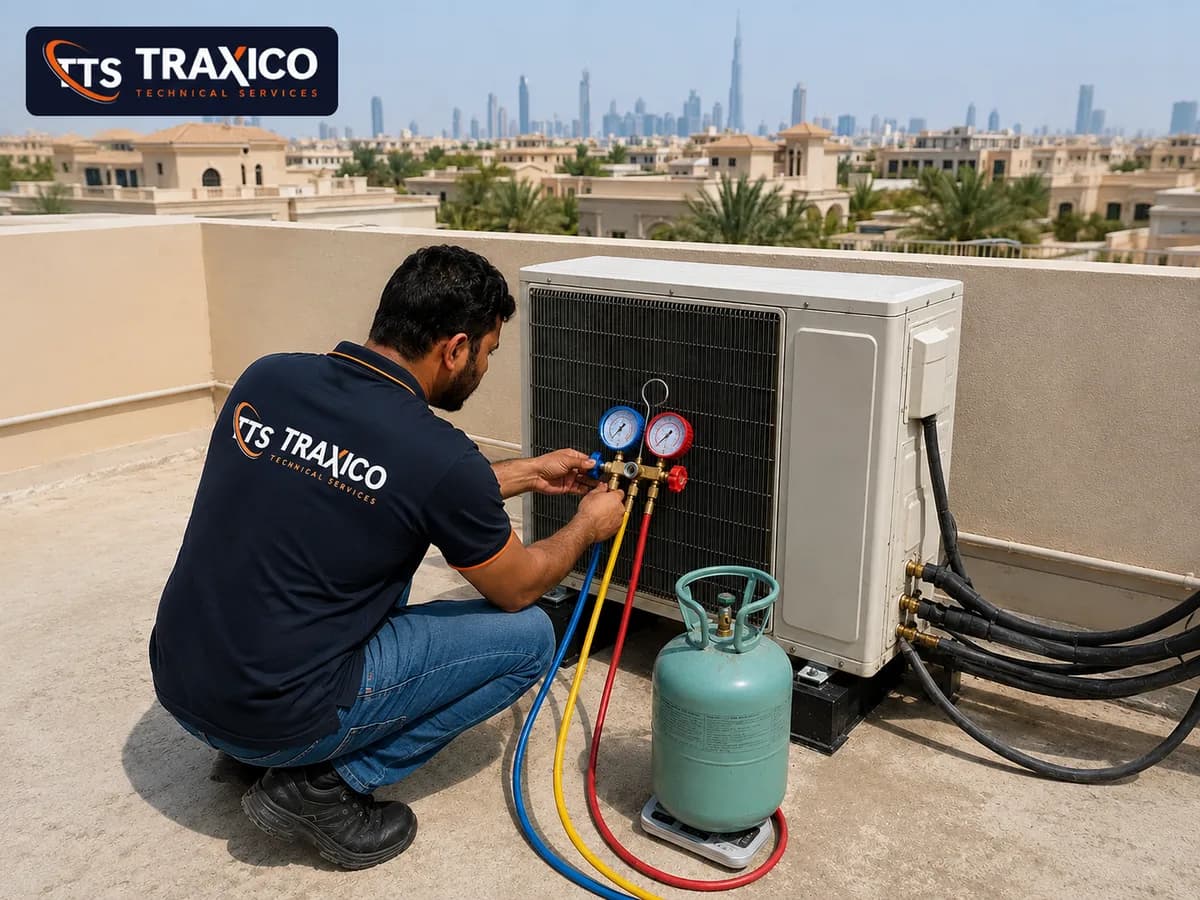
Read against ambient with gauges. It is how a slow leak gets caught while it is still a small job rather than after the unit has stopped and the compressor has run low on charge for a month.
Drain lines
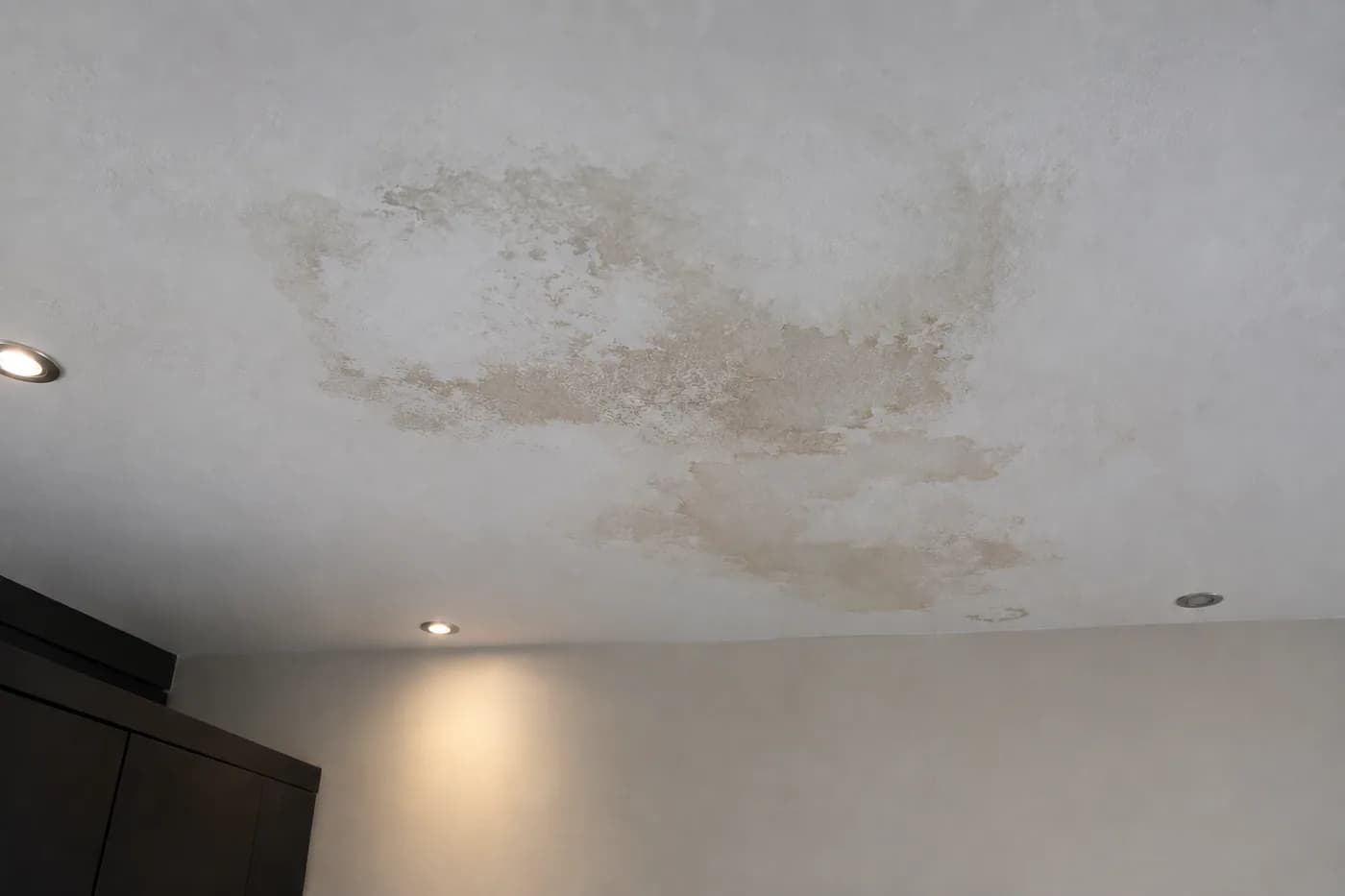
Flushed through under pressure before they block. Cheapest item on any service sheet and the one that prevents water damage.
Electrical connections and protection
Terminals checked and torqued, protective devices tested. Connections loosen with heat cycling, and a loose one arcs and burns eventually. This is not something to attempt with a screwdriver and confidence.
Water tanks and pumps
In a villa, the tank needs cleaning and the pump has a pressure switch and a diaphragm that wear. Neglected, the first sign is low pressure everywhere, and by then the pump has usually been running badly for a while.
How often, realistically
The honest answer varies with the property, and anyone giving one number for every home in Dubai is selling a package rather than answering the question. As a starting point:
- Flat with one or two split units: two professional visits a year, spaced roughly six months apart
- Villa: three or four, because there is more equipment and the outdoor units sit in the open
- Office or shop: quarterly, because filters load faster with doors opening all day
- District cooling flat: once or twice, since there is no refrigerant circuit inside the property
What matters more than the number is that the visits are spread through the year and actually happen. Equipment here runs continuously, so there is no quiet period during which a property catches up on its own.
The point of all of it
Preventive maintenance is not about stopping things from wearing out. It is about finding out while it is still cheap.
Nothing on this list stops a compressor from ageing or a pump from wearing. What it does is turn the expensive surprise into a planned job at a time you chose, which is a different experience entirely.