Why Regular Property Maintenance Actually Matters
The argument for regular maintenance gets made badly and dishonestly by most of our industry. Here it is made properly, including where it does not apply.
14 August 2026 · 6 minute read · TRAXICO

Most articles on this subject are written to sell a contract, and it shows. They open with an invented statistic, promise a percentage saving nobody can verify, and end with a form.
We do sell contracts, so read this with that in mind. What we can do is make the argument honestly, including the part where it does not apply to you.
The real reason, and it is not the one usually given
The usual pitch is that maintenance stops things breaking. It does not, quite. Compressors wear out. Pumps fail. Elements corrode. No amount of servicing makes a machine permanent.
Maintenance does not stop things failing. It changes when you find out, and at that point it changes almost everything else.
A fault found on a scheduled visit is a planned job at a time you chose, at a normal rate, with the part ordered in advance. The same fault found when the equipment stops is an urgent call-out, possibly out of hours, with whatever damage happened between the failure and the phone call.
Why the case is stronger in Dubai than elsewhere
This is where most advice written for other countries stops applying.
Air conditioning here runs day and night, twelve months a year. It does not get the months off that the same machine gets almost anywhere else. A manufacturer writing a service interval was thinking about a unit doing a fraction of those hours.
That has specific consequences rather than vague ones:
- Coils load with dust continuously, and a coated coil cannot shed heat, so the machine works harder for the same result
- The condensate drain never dries out, which is exactly the condition that grows the sludge that blocks it
- The compressor cycles constantly, and every start is the hardest moment in its life
- Electrical terminals expand and contract with every cycle and work themselves loose
None of that is a season. It is running hours, and running hours here are close to continuous.
What it protects that people forget
The building, not just the equipment
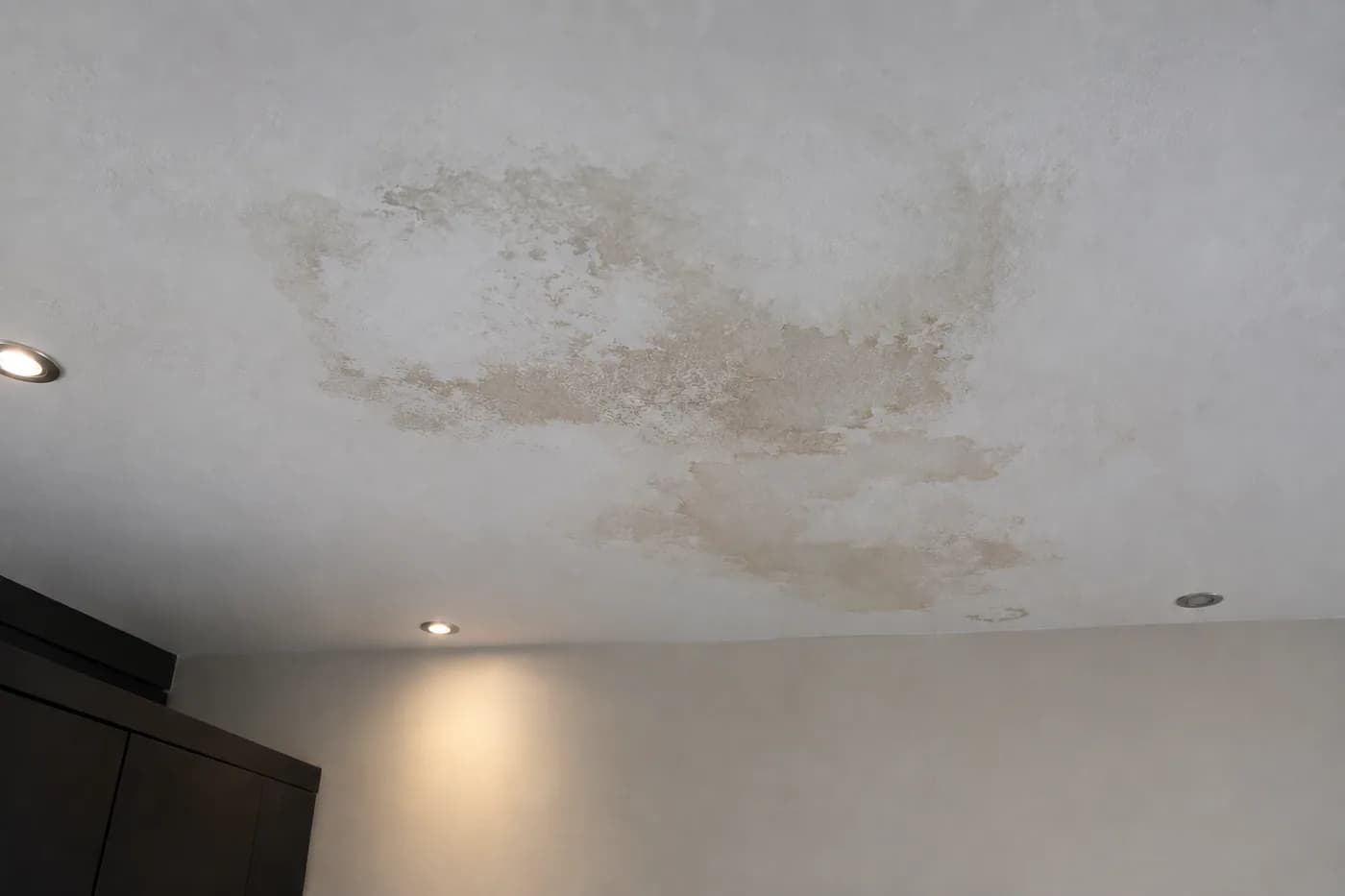
A blocked AC drain does not damage the air conditioner. It damages the ceiling underneath it, and in a tower, somebody else’s ceiling. A slow leak under a sink does not damage the tap. It swells the carcass, lifts the flooring and works into the skirting.
The equipment failure is usually the cheap half of the problem.
What you pay every month
A dirty condenser coil raises head pressure, and a compressor working against high head pressure draws more current for the same cooling. You pay that difference every month without anything appearing to be wrong, because the room still gets cold, just slowly.
We will not quote you a percentage, because the honest figure depends entirely on how bad the coil was.
The paperwork, when it matters
A record of what was serviced and when is worth having when you sell, when you hand a property back, and when a landlord and a tenant disagree about who let something fail. It is the least interesting benefit and it settles the most arguments.
Who this genuinely suits
- Villas, where there is more equipment and nobody else to call about any of it
- Landlords with several properties, where chasing trades is the actual cost
- Shops and offices that lose money on a day without cooling
- Buildings, where planned work is cheaper than reacting to tenants
What a schedule looks like in practice
People imagine a maintenance contract as somebody in the property constantly. In practice it is a handful of visits a year, most of them under two hours, and the value is in what they catch rather than in how long they take.
A typical visit on a flat is filters and indoor coil, drain flushed, outdoor coil washed, pressures read, connections checked and the thermostat verified against an actual thermometer. On a villa it is the same list several times over, plus the water tank and the booster pump, which are the two things in a villa that nobody thinks about until the pressure drops everywhere at once.
What comes back afterwards matters as much as the visit. A written record of what was checked, what was found and what was done gives you something to compare against next time. That is how you notice that the same unit has needed refrigerant twice, which is the kind of pattern nobody spots from memory.
And who it does not
If you rent a small flat with one or two split units, a maintenance contract is usually not worth it. Two visits a year booked as you need them costs less, and calling somebody the day a fault appears is a perfectly reasonable way to live.
It is also worth reading your tenancy contract before you buy anything. In Dubai, AC servicing falls to the landlord under plenty of contracts and to the tenant under plenty of others, and people pay for it twice more often than you would expect.
Any company that will not tell you when you do not need their contract is worth being careful with, because the same judgement applies to everything else they recommend.